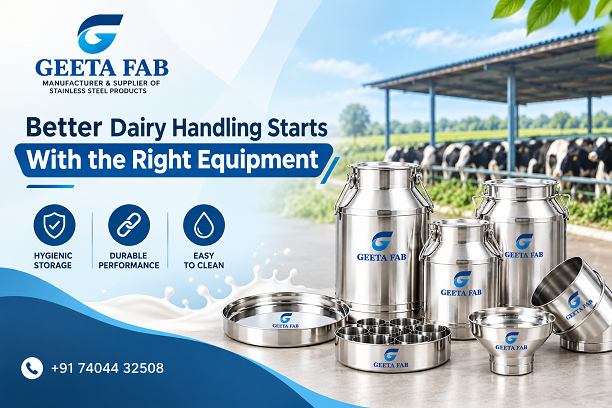
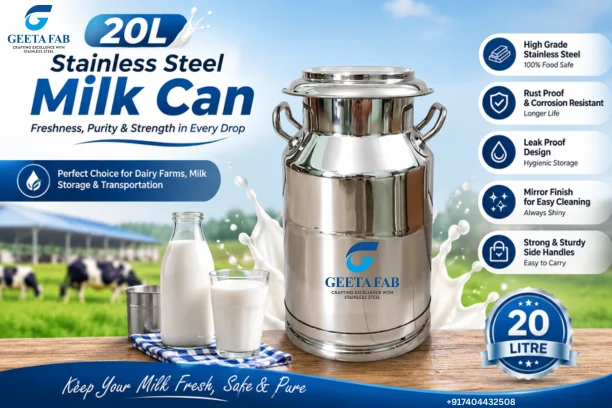
For an international dairy business, choosing equipment is therefore not just about finding a supplier with a long product list. The buyer also needs to consider material quality, hygiene, capacity, documentation, shipping and after-sales support.
This is where selecting the right dairy equipment exporter becomes important.
India has a well-established manufacturing base for stainless steel dairy and food-processing equipment, making Indian suppliers worth considering for overseas projects.
What Equipment Does a Dairy Industry Usually Need?
A dairy plant may require several types of equipment depending on its production process.
Common requirements include:
● Milk storage cans
● Milk storage tanks
● Milk collection equipment
● Milk cooling systems
● Pasteurisation equipment
● Dairy processing tanks
● Cream separators
● Milk pumps
● Cheese-making equipment
● Paneer and curd processing equipment
● Stainless steel accessories
The actual requirement depends on whether the buyer operates a collection centre, small dairy, processing plant or large commercial facility.
That distinction should be made before requesting quotations.
Why Stainless Steel Is Commonly Used
Food-contact equipment needs to be designed with hygiene and cleaning in mind.
Stainless steel is widely used in dairy applications because it is durable, relatively easy to clean and suitable for many food-processing environments. The specific grade should still be selected according to the application, product contact requirements and relevant standards.
For buyers, the material specification should never be left vague.
Ask exactly what grade is being offered and where it will be used.
What Should International Buyers Check?
Connecting a dairy equipment exporter involves a few additional considerations compared with buying locally.
1. Product Specifications
Make sure dimensions, capacity, material grade and operating requirements are clearly mentioned.
2. Export Packaging
Dairy equipment may travel long distances and pass through several handling points. Proper packaging helps reduce the risk of damage during transportation.
3. Documentation
Depending on the destination and shipment, buyers may require commercial invoices, packing lists, shipping documentation, certificates and other paperwork.
4. Customisation
A standard product may not always fit an existing dairy plant. Ask whether dimensions, fittings or capacities can be adjusted where practical.
5. Communication
A supplier who communicates clearly before dispatch can make the export process considerably easier.
Comparing Dairy Equipment Suppliers
Don't compare exporters only on the quoted price.
|
Factor
|
What to Check
|
|
Product range
|
Does the supplier cover your requirements?
|
|
Material
|
Confirm stainless steel grade and construction
|
|
Capacity
|
Does equipment match production needs?
|
|
Customisation
|
Can specifications be adjusted?
|
|
Quality control
|
Understand inspection procedures
|
|
Packaging
|
Suitable for international transportation
|
|
Documentation
|
Export paperwork and product documents
|
|
Delivery
|
Production and shipping timelines
|
|
Support
|
Assistance after installation or delivery
|
A slightly higher quotation may make sense if it includes better construction, suitable documentation and dependable support.
Top Dairy Equipment Exporters: How to Evaluate Them
There are many Indian manufacturers and exporters serving dairy and food-processing industries. Rather than treating a "top as a fixed ranking, international buyers should shortlist suppliers based on their own requirements.
A useful evaluation framework is:
1. Manufacturing capability – Can the supplier produce the required equipment?
2. Dairy experience – Do they understand food-processing applications?
3. Material quality – Are specifications clearly documented?
4. Product range – Can multiple requirements be sourced together?
5. Customisation – Is project-specific fabrication possible?
6. Quality checks – Are products inspected before dispatch?
7. Export experience – Is international shipment part of their regular business?
8. Packaging – Are products prepared for long-distance transport?
9. Communication – Is technical information provided clearly?
10. After-sales assistance – What happens if support is required after delivery?
This approach is generally more useful than relying on a generic ranking.
Why Consider Geeta Fab?
Geeta Fab supplies stainless steel dairy and food-processing products for different operational requirements.
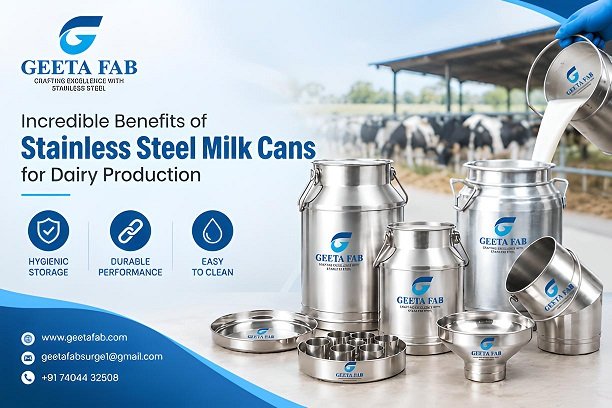
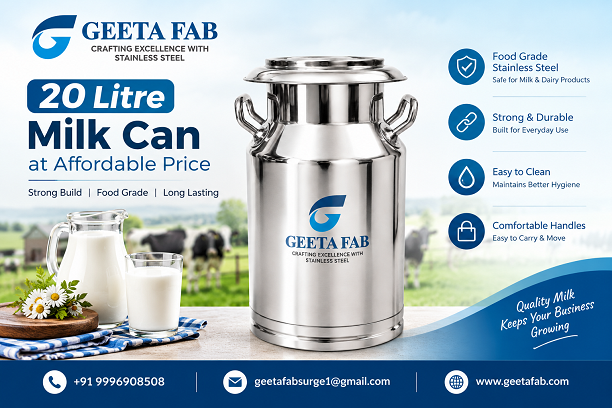
Its product portfolio includes dairy-related equipment such as milk cans and other stainless steel products. For international buyers, working with a manufacturer that can discuss specifications before order confirmation can simplify procurement.
For example, a buyer sourcing milk cans for a dairy collection network may need to consider capacity, dimensions, handle design, material and quantity rather than simply asking for the cheapest available option. More Dairy Equipment Manufacturers & Suppliers in India
That kind of specification-based discussion helps both sides avoid misunderstandings.
Before You Place an Export Order
Keep these details ready:
❖ Product name and quantity
❖ Required capacity
❖ Stainless steel grade
❖ Dimensions
❖ Application and operating conditions
❖ Required customisation
❖ Destination country
❖ Packaging requirements
❖ Delivery timeline
❖ Required documentation
A reliable dairy equipment Supplier should be able to work through these points before finalising the order.
For an overseas dairy project, the cheapest quotation is rarely the only thing worth comparing. Material specifications, manufacturing consistency, export handling and communication can have a much greater impact once the equipment reaches its destination.
If you're sourcing dairy equipment from India, you can explore the range offered by Geeta Fab and discuss your equipment and export requirements directly with the supplier.